
Rental property investment is one of the most popular ways to build long-term wealth. Many investors are attracted by the idea of steady rental income, property appreciation, and tax advantages. However, like any investment, owning rental property comes with both benefits and challenges. Understanding the pros and cons can help you decide whether this strategy fits your financial goals.
What Is Rental Property Investment?
Rental property investment involves purchasing residential or commercial real estate and renting it out to tenants. The goal is to generate regular income while the property increases in value over time. Investors can choose from various types of rental properties, including apartments, single-family homes, and commercial spaces.
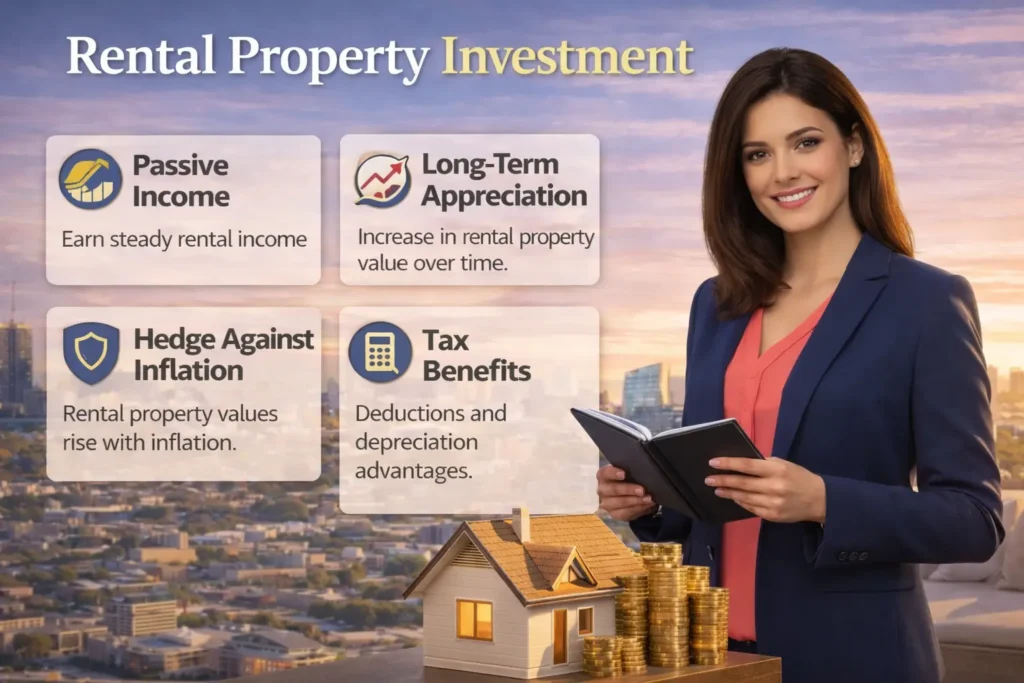
Pros of Investing in Rental Property
1. Steady Cash Flow
One of the biggest advantages of rental property is consistent monthly income. Rent payments can cover mortgage costs and expenses while providing extra profit.
2. Long-Term Appreciation
Real estate typically increases in value over time. This means your property could be worth significantly more in the future, giving you strong returns when you sell.
3. Tax Benefits
Rental property owners often receive tax deductions on mortgage interest, property taxes, insurance, maintenance, and depreciation. These deductions can reduce overall tax liability.
4. Hedge Against Inflation
As the cost of living rises, rental prices usually increase as well. This allows property owners to maintain or even improve their purchasing power over time.
5. Tangible Asset
Unlike stocks or digital assets, real estate is a physical asset. Many investors feel more secure owning something tangible that provides utility and value.
Cons of Investing in Rental Property
1. High Initial Investment
Buying a rental property usually requires a significant down payment, closing costs, and renovation expenses.
2. Ongoing Maintenance Costs
Property owners are responsible for repairs, maintenance, and unexpected issues. These expenses can reduce profits.
3. Tenant-Related Risks
Tenants may cause damage, miss rent payments, or leave unexpectedly. Finding reliable tenants takes time and effort.
4. Vacancy Periods
When a property is empty, you still need to cover mortgage payments, utilities, and other costs without rental income.
5. Time-Consuming Management
Managing a rental property involves collecting rent, handling repairs, and dealing with tenants. Some investors hire property managers, but that adds extra costs.

Is Rental Property Investment Right for You?
Rental property investment can be highly rewarding if you have the financial stability and patience for long-term returns. It works best for investors who:
Want steady monthly income
Are prepared for maintenance and management tasks
Have enough capital for upfront costs
Plan to hold the property long term
Final Thoughts
Rental property investment offers strong benefits like passive income, tax advantages, and property appreciation. However, it also comes with risks such as high upfront costs, vacancies, and tenant issues. Carefully weighing the rental property investment pros and cons will help you make smarter, more profitable decisions in real estate.