
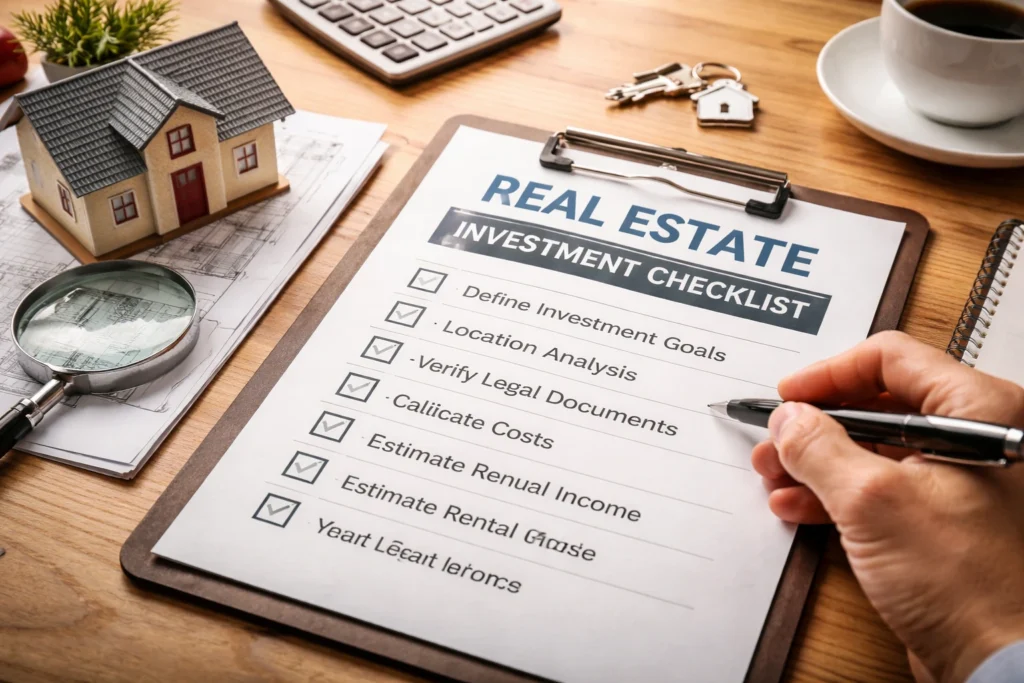
Investing in property can be one of the most effective ways to build long-term wealth, but success rarely happens by chance. A smart investor does not buy based on emotion, hype, or location buzz alone. They follow a clear real estate investment checklist to evaluate the property, the market, the costs, and the long-term potential before making a decision.
Whether you are buying your first rental property, planning to invest in a second home, or looking at commercial assets, having a structured process can help you avoid expensive mistakes. Real estate offers strong income and appreciation opportunities, but only when the numbers, documents, and strategy align.
In this guide, we will walk through a complete real estate investment checklist that can help beginners and experienced investors make more confident choices.
Why a Real Estate Investment Checklist Matters
Many people enter the property market with excitement but without a system. They may focus only on the asking price or visual appeal and overlook factors like hidden repair costs, weak rental demand, legal complications, or poor resale potential.
A proper real estate investment checklist helps you:
evaluate a property objectively
reduce financial and legal risk
understand total investment cost
estimate expected returns
compare multiple opportunities more easily
stay aligned with your investment goals
Instead of guessing, you make decisions based on research and measurable factors.
Define Your Investment Goal First
Before reviewing locations, builders, or payment plans, begin with your purpose. Every investor should know why they are investing.
Are you looking for:
regular rental income
long-term capital appreciation
portfolio diversification
tax advantages
retirement planning
a future self-use property that can generate income in the meantime
Your goal shapes every part of your decision. For example, a rental-focused investor may prioritize tenant demand and yield, while an appreciation-focused buyer may care more about growth corridors and future infrastructure. This is why the first point in any real estate investment checklist should always be goal clarity.
Study the Location Carefully
Location remains one of the strongest factors in property investment. Even a well-priced property can underperform if the area lacks demand, connectivity, or future development potential.
When reviewing location, check:
Connectivity and Accessibility
Look at roads, highways, metro links, railway stations, airports, and access to major employment hubs. A property in a connected area usually attracts both tenants and buyers more easily.
Social Infrastructure
Schools, hospitals, shopping centers, banks, restaurants, and daily convenience stores add value to a location. Areas with complete social infrastructure tend to remain stable and desirable.
Job Growth and Business Activity
Rental demand is often stronger near IT parks, industrial zones, commercial centers, and business districts. A healthy local economy can support occupancy and long-term appreciation.
Future Development Plans
Upcoming infrastructure such as expressways, metro lines, business parks, or public facilities can significantly improve an area’s value over time. This makes location research a non-negotiable part of your real estate investment checklist.
Evaluate the Type of Property
Not every investment property serves the same purpose. Your checklist should include whether the asset matches your budget, risk profile, and return expectations.
Common options include:
residential apartments
independent houses
plots or land
commercial shops
office spaces
co-living or vacation rental units
Each has different entry costs, maintenance needs, tenant types, and resale cycles. For example, apartments may be easier to rent and manage, while land can offer appreciation but no immediate cash flow. A complete real estate investment checklist should always compare property type with your expected outcome.
Check the Builder or Seller Background
If you are buying a newly launched or under-construction property, the reputation of the developer matters a lot. A poor track record can lead to delays, quality issues, or legal problems.
Review the following:
past project delivery record
construction quality
customer reviews
legal disputes or complaints
transparency in pricing and commitments
approvals and registrations
For resale properties, check the seller’s ownership status and history of the asset. This step in your real estate investment checklist protects you from future complications.
Verify All Legal Documents
Legal due diligence is one of the most important stages of property investment. Many investors ignore this step because the property looks attractive or the deal feels urgent. That is a risky move.
Your legal verification should include:
Title Deed
Confirm that the ownership is clear and transferable.
Sale Deed and Chain of Ownership
Review previous ownership records to ensure there are no disputes.
Encumbrance Certificate
This helps verify that the property is free from loans or legal liabilities.
Approved Building Plan
Make sure construction follows the sanctioned plan.
Land Use Approval
Check whether the land use matches the project type.
Occupancy Certificate and Completion Certificate
These are especially important for ready-to-move properties.
RERA Registration
For many markets, project registration under the relevant authority offers an added layer of transparency and protection.
No real estate investment checklist is complete without thorough legal review by a qualified property lawyer.
Understand the True Cost of Investment
Many buyers calculate only the property price and forget the additional costs. This leads to budget stress and lower-than-expected returns.
Include these in your cost estimate:
booking amount
down payment
registration and stamp duty
legal fees
brokerage charges
GST if applicable
loan processing fee
maintenance deposit
interior and furnishing cost
repair or renovation expenses
property tax
insurance
This part of the real estate investment checklist is essential because profitability depends on total cost, not just purchase price.
Assess Financing and Loan Readiness
If you are using leverage, financing should be examined very carefully. A property may look profitable on paper but become burdensome if the loan structure is not comfortable.
Review:
your credit score
loan eligibility
interest rate
fixed vs floating rate
EMI affordability
loan tenure
prepayment rules
total interest payable over time
Your monthly payment should not stretch your finances beyond a safe limit. A good real estate investment checklist helps ensure the investment supports your life instead of creating pressure.
Estimate Rental Income and Cash Flow
For income-focused investors, rental potential is a major decision factor. Do not rely only on verbal claims from brokers or sellers. Study the actual local market.
Check:
average rent for similar properties nearby
occupancy demand in the area
tenant profile
maintenance costs
property management expenses
expected vacancy periods
monthly EMI if financed
Your actual cash flow is:
Rental Income – EMI – Maintenance – Taxes – Vacancy Cost – Repairs
A strong real estate investment checklist should help you calculate realistic net income, not inflated assumptions.
Measure Return on Investment
Smart investing requires numbers. Once you know your total cost and expected income, estimate the return potential.
Some useful metrics include:
Rental Yield
This is annual rental income divided by total property cost. It helps compare rental performance across properties.
Capital Appreciation Potential
Estimate how much the property may increase in value over time based on location growth, infrastructure, and demand.
Cash-on-Cash Return
This helps you understand the annual return based on the actual cash you invested.
Total ROI
This combines rental income and appreciation over a given period.
Using a real estate investment checklist makes ROI analysis more disciplined and less emotional.
Inspect the Physical Condition of the Property
A property may look fine in photos but hide structural and maintenance issues. Site visits are extremely important, especially for resale assets.
During inspection, review:
wall cracks or seepage
plumbing condition
electrical fittings
flooring and paint quality
ventilation and natural light
water supply
lifts and common areas
parking availability
security systems
age of the building
Poor physical condition can lead to high maintenance costs and delayed rental returns. That is why inspection is a vital section in any real estate investment checklist.
Analyze Market Trends Before Buying
A good property in a weak market can still underperform. Study the local real estate cycle before making a purchase.
Important market indicators include:
current property price trend
rental trend
supply versus demand
inventory levels
resale activity
new project launches
infrastructure announcements
average time properties stay unsold
If prices have risen too quickly without strong fundamentals, caution is wise. A balanced real estate investment checklist includes both micro-level property review and macro-level market analysis.
Review Exit Strategy and Resale Potential
Every investor should think about the exit even before entering. You may need to sell due to changing goals, better opportunities, or liquidity needs.
Ask yourself:
how easy will this property be to resell
who is the likely future buyer
is the unit size market-friendly
does the location support resale demand
are there too many similar units in the area
will future development improve marketability
A practical real estate investment checklist does not stop at buying; it also considers how you will profitably exit.
Consider Risk Factors
All investments carry risk, and property is no different. The goal is not to avoid risk entirely but to identify and manage it early.
Common risks include:
overpaying for the property
poor tenant demand
legal disputes
project delays
unexpected repairs
rising loan interest rates
low liquidity
market slowdown
Adding a risk review section to your real estate investment checklist keeps your decision balanced and realistic.
Build a Personal Decision Framework
Once you gather all this information, create a scoring system. Give each factor a rating such as 1 to 5 for:
location
legal clarity
affordability
rental income
appreciation potential
builder credibility
physical condition
resale potential
risk level
This helps you compare different opportunities more logically. A structured real estate investment checklist becomes even more powerful when it is measurable.
Sample Real Estate Investment Checklist for Quick Review
Here is a simple summary you can use before buying:
define your investment purpose
research the neighborhood
check connectivity and infrastructure
verify builder or seller credibility
confirm legal documents
calculate total acquisition cost
assess loan affordability
estimate rent and vacancy risk
inspect the physical condition
calculate ROI and yield
study market trends
evaluate resale and exit options
identify key risks
compare with alternative properties
This quick format can save you from rushed decisions and poor-quality investments.
Final Thoughts
Property investment can create long-term wealth, passive income, and financial security, but only when approached with discipline. Following a well-structured real estate investment checklist helps you move beyond guesswork and make decisions based on research, risk assessment, and return potential.
The best investors are not always the ones who buy first. They are the ones who evaluate carefully, negotiate wisely, and stay patient until the right opportunity appears. Whether you are buying a rental apartment, a commercial unit, or a future appreciation asset, using a dependable real estate investment checklist can make the difference between a smart investment and an expensive lesson.
Take your time, verify every detail, and let data guide your next move. In real estate, the quality of your decision at the time of purchase often determines the quality of your returns for years to come.
FAQs
1. What is a real estate investment checklist?
A real estate investment checklist is a step-by-step guide used to evaluate a property before purchase. It usually includes location, legal documents, pricing, rental income, financing, risk, and resale potential.
2. Why is a real estate investment checklist important?
It helps investors reduce mistakes, compare options properly, understand total costs, and make more informed property decisions.
3. What should I check before investing in property?
You should review the location, market demand, legal status, builder reputation, total cost, financing options, expected rental return, and future resale potential.
4. How do I know if an investment property is profitable?
You can estimate profitability by calculating rental yield, cash flow, total investment cost, and long-term appreciation potential.
5. Is location the most important factor in real estate investment?
Location is one of the most important factors because it affects rental demand, appreciation, resale value, and overall investment stability.