
Introduction
The real estate industry does not grow in a straight line. Like any other financial market, it moves in patterns known as real estate market cycle . These cycles influence property prices, rental demand, construction activity, and investment returns. Understanding these patterns helps buyers, sellers, and investors make smarter decisions.
Whether you are a first-time buyer or an experienced investor, knowing how real estate market cycles work can help you identify the right time to buy, sell, or hold property.
What Are Real Estate Market Cycles?
Real estate market cycle refer to the natural fluctuations in property markets over time. These cycles are influenced by economic conditions, interest rates, employment levels, population growth, and government policies.
Typically, a real estate cycle moves through four main phases:
Recovery
Expansion
Hyper-supply
Recession
Each phase has different characteristics and opportunities.
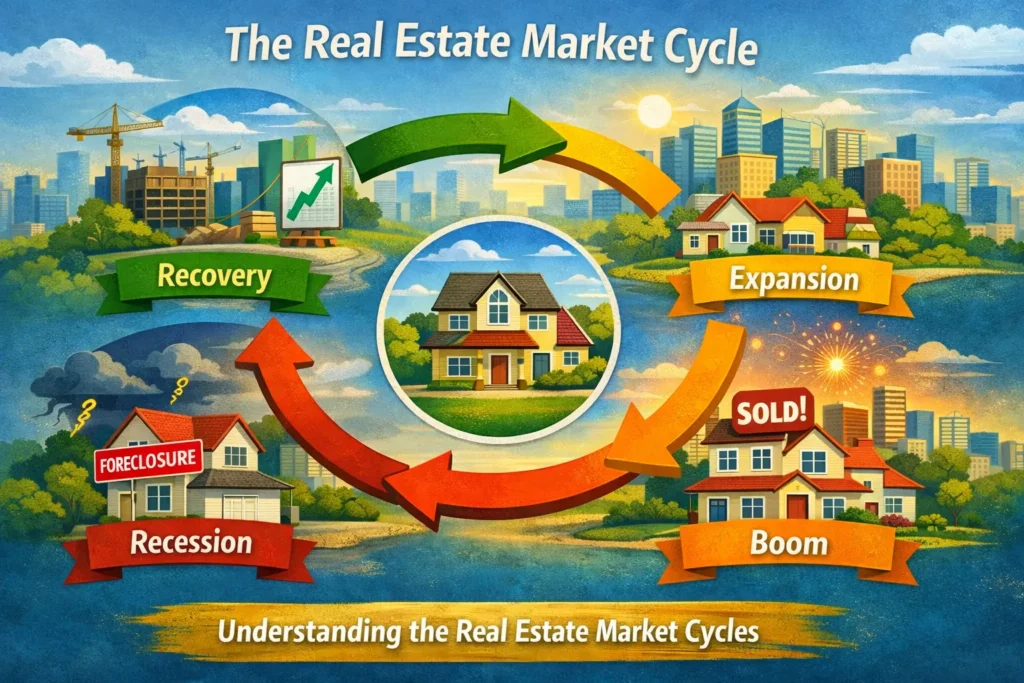
Phases of Real Estate Market Cycle
1. Recovery Phase in Real Estate Market Cycle
The recovery phase begins after a market downturn. During this stage:
-
Property prices stabilize.
-
Vacancy rates remain high.
-
Construction activity is low.
-
Investor confidence slowly returns.
This phase is often considered a good time for long-term investors to enter the market because prices are relatively low.
2. Expansion Phase in Real Estate Market Cycle
The expansion phase is the growth stage of the cycle. Key features include:
-
Rising property prices.
-
Increasing demand for housing.
-
Lower vacancy rates.
-
New construction projects.
During this phase, the economy is strong, employment is high, and investors see higher returns.
3. Hyper-Supply Phase in Market Cycles
In this phase, the market becomes oversupplied due to excessive construction.
Characteristics:
-
Too many properties available.
-
Slowing price growth.
-
Increasing vacancy rates.
-
Reduced rental growth.
Investors should be cautious during this stage, as the market may soon enter a downturn.
4. Recession Phase in Market Cycles
This is the declining stage of the cycle.
Key signs:
-
Falling property prices.
-
High vacancy rates.
-
Reduced demand.
-
Declining rents.
Although it may seem risky, this phase often presents opportunities to buy properties at discounted prices.
Phases of Real Estate Market Cycles
1. Recovery Phase in Real Estate Market Cycle
The recovery phase begins after a market downturn. During this stage:
-
Property prices stabilize.
-
Vacancy rates remain high.
-
Construction activity is low.
-
Investor confidence slowly returns.
This phase is often considered a good time for long-term investors to enter the market because prices are relatively low.
2. Expansion Phase in Real Estate Market Cycle
The expansion phase is the growth stage of the cycle. Key features include:
-
Rising property prices.
-
Increasing demand for housing.
-
Lower vacancy rates.
-
New construction projects.
During this phase, the economy is strong, employment is high, and investors see higher returns.
3. Hyper-Supply Phase in Market Cycles
In this phase, the market becomes oversupplied due to excessive construction.
Characteristics:
-
Too many properties available.
-
Slowing price growth.
-
Increasing vacancy rates.
-
Reduced rental growth.
Investors should be cautious during this stage, as the market may soon enter a downturn.
4. Recession Phase in Market Cycles
This is the declining stage of the cycle.
Key signs:
-
Falling property prices.
-
High vacancy rates.
-
Reduced demand.
-
Declining rents.
Although it may seem risky, this phase often presents opportunities to buy properties at discounted prices.
Phases of Real Estate Market Cycles
1. Recovery Phase in Real Estate Market Cycle
The recovery phase begins after a market downturn. During this stage:
-
Property prices stabilize.
-
Vacancy rates remain high.
-
Construction activity is low.
-
Investor confidence slowly returns.
This phase is often considered a good time for long-term investors to enter the market because prices are relatively low.
2. Expansion Phase in Real Estate Market Cycle
The expansion phase is the growth stage of the cycle. Key features include:
-
Rising property prices.
-
Increasing demand for housing.
-
Lower vacancy rates.
-
New construction projects.
During this phase, the economy is strong, employment is high, and investors see higher returns.
3. Hyper-Supply Phase in Real Estate Market Cycles
In this phase, the market becomes oversupplied due to excessive construction.
Characteristics:
-
Too many properties available.
-
Slowing price growth.
-
Increasing vacancy rates.
-
Reduced rental growth.
Investors should be cautious during this stage, as the market may soon enter a downturn.
4. Recession Phase in Real Estate Market Cycles
This is the declining stage of the cycle.
Key signs:
-
Falling property prices.
-
High vacancy rates.
-
Reduced demand.
-
Declining rents.
Although it may seem risky, this phase often presents opportunities to buy properties at discounted prices.
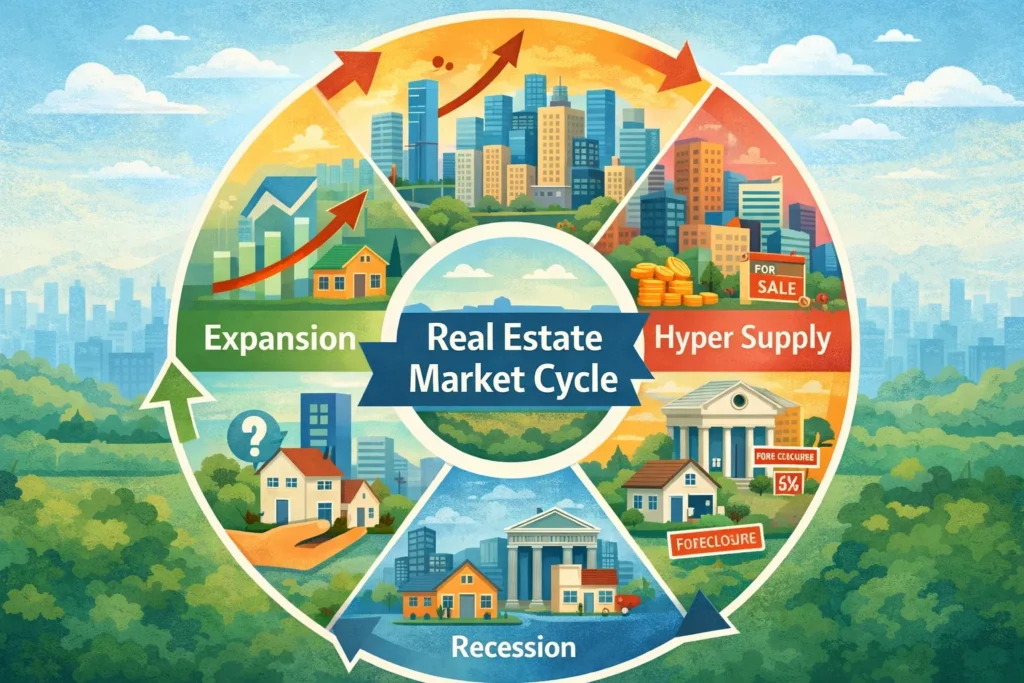
Factors That Influence Real Estate Market Cycles
Several factors drive real estate market cycles, including:
-
Interest rates: Lower rates increase buying power.
-
Economic growth: Strong economies boost demand.
-
Employment levels: More jobs mean more homebuyers.
-
Population growth: Higher population increases housing demand.
-
Government policies: Tax benefits and regulations affect the market.
How to Invest Wisely in Real Estate Market Cycles
Understanding real estate market cycles helps investors reduce risks and maximize returns.
Smart Strategies for Market Cycles
-
Buy during the recovery phase.
-
Hold or expand during the expansion phase.
-
Be cautious in the hyper-supply phase.
-
Look for bargains in the recession phase.
-
Focus on long-term growth rather than short-term speculation.
Signs to Identify Real Estate Market Cycles
To recognize real estate market cycles, watch for these indicators:
-
Changes in interest rates.
-
Housing supply and demand.
-
Construction permits.
-
Rental price trends.
-
Employment statistics.
Monitoring these factors can help you predict market movements.
Conclusion
Real estate market cycles are a natural part of the property industry. Instead of fearing these fluctuations, smart investors learn to use them to their advantage. By understanding each phase and the factors that influence the market, you can make better investment decisions and achieve long-term financial growth.
Whether the market is rising or falling, knowledge of real estate market cycles is the key to successful property investment.